Non-OHIP Cosmetic Services
Cosmetic Lesion Removal — Shave Biopsy
Removal of benign cosmetic lesions such as moles, skin-coloured papules, dermatofibromas, and other raised lesions using a shave excision technique.
- A shave excision is used to remove benign raised skin lesions that are cosmetically bothersome to the patient.
- The area is numbed with local anaesthetic and the lesion is carefully shaved off at or just below skin level using a surgical blade.
- This technique is best suited for raised or protruding lesions. It provides a smooth, flat result in most cases.
- Healing time is typically 1–3 weeks. The area may remain pink for several weeks and gradually blends with the surrounding skin.
- All removed tissue is sent for pathological examination to confirm the diagnosis.
This is a non-OHIP insured service when performed for cosmetic purposes. Fees will be discussed at the time of consultation.
Skin Tag Removal — Electrocautery & Snip Cautery
Removal of skin tags (acrochordons) using electrocautery, snip excision, or a combination of both methods.
- Skin tags are very common benign skin growths that hang off the skin by a small stalk. They frequently occur on the neck, armpits, under the breasts, and groin area.
- Small skin tags can be removed by snip excision using fine surgical scissors, with or without local anaesthetic, depending on size and location.
- Electrocautery uses a small electrical current to burn the base of the skin tag, removing it and cauterizing the area simultaneously to minimize bleeding.
- Multiple skin tags can often be treated in a single session.
- The procedure is quick, with minimal discomfort. Healing is typically rapid, with small spots healing within a few days to a week.
Skin tag removal for cosmetic purposes is not covered by OHIP. Pricing is typically based on the number of skin tags treated.
Cosmetic Lesion Removal — Liquid Nitrogen Cryotherapy
Cosmetic removal of benign lesions such as seborrhoeic keratoses, lentigines (age/sun spots), and other benign surface lesions using liquid nitrogen freezing.
- Liquid nitrogen cryotherapy is an effective method for removing benign cosmetic lesions such as seborrhoeic keratoses (barnacles), solar lentigines (sun spots/age spots), and cherry angiomas.
- Liquid nitrogen (−196°C) is applied to the lesion for a controlled duration, freezing and destroying the abnormal cells.
- After treatment, the area will develop redness, swelling, and sometimes a blister. Over 1–3 weeks, a crust will form and the treated lesion will slough off.
- The procedure is well-tolerated with only brief stinging or burning during application.
- Some lesions may require more than one treatment session for complete resolution. Follow-up will be arranged as needed.
When performed for cosmetic purposes (i.e., lesions that are not medically concerning), cryotherapy is not covered by OHIP. Fees are discussed at consultation.
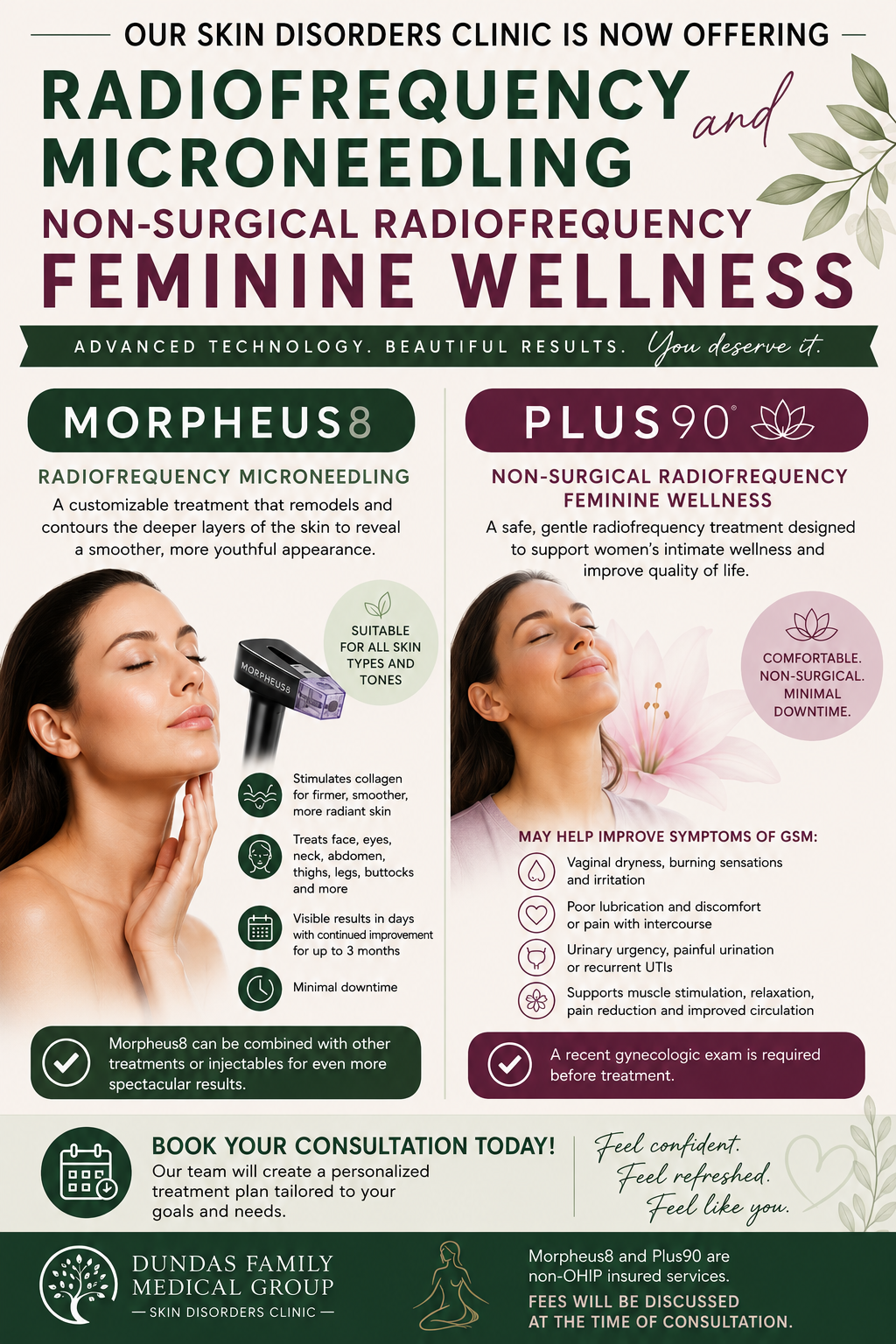
Morpheus8 — Radiofrequency Microneedling
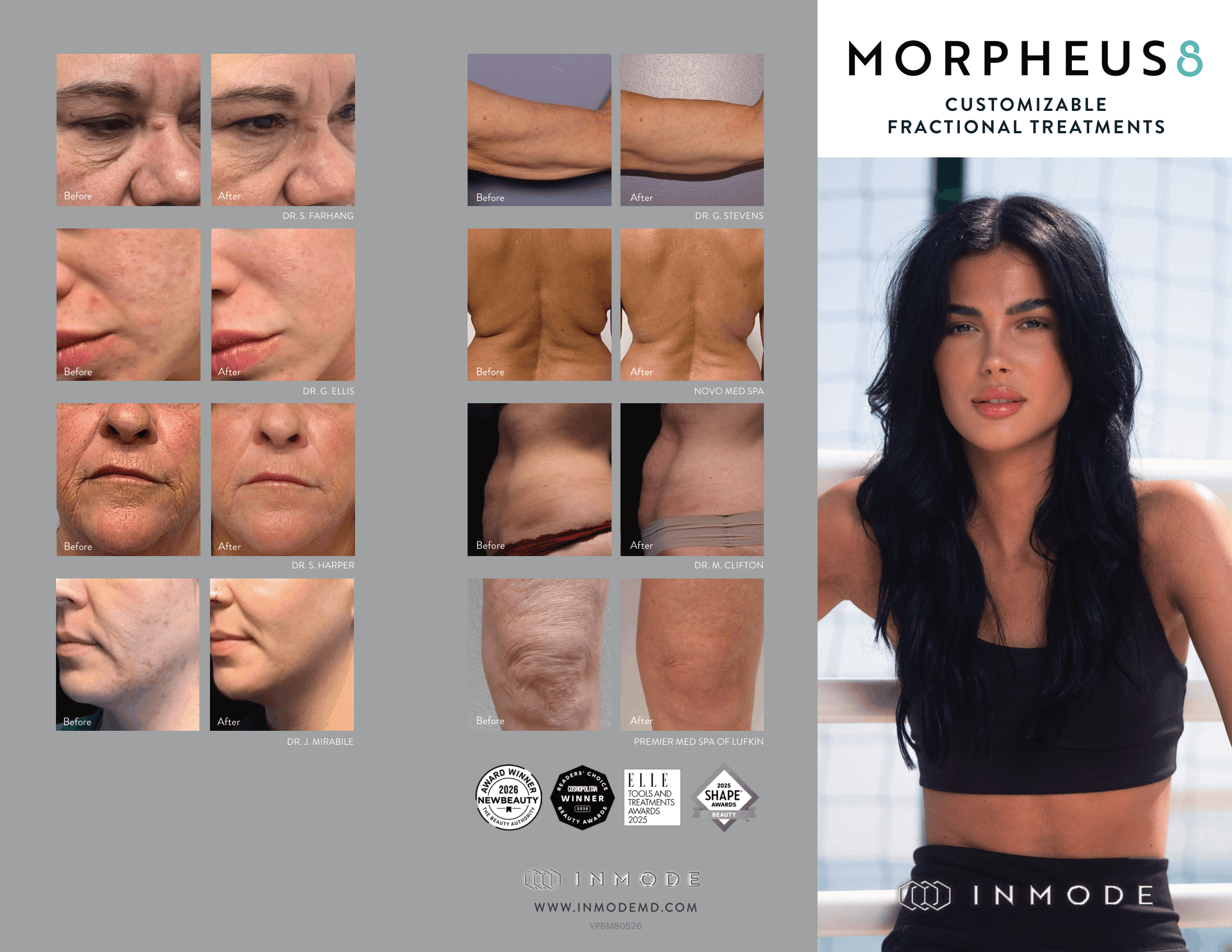
A customizable fractional radiofrequency microneedling treatment that remodels and contours the deeper layers of the skin to reveal a smoother, more youthful appearance.
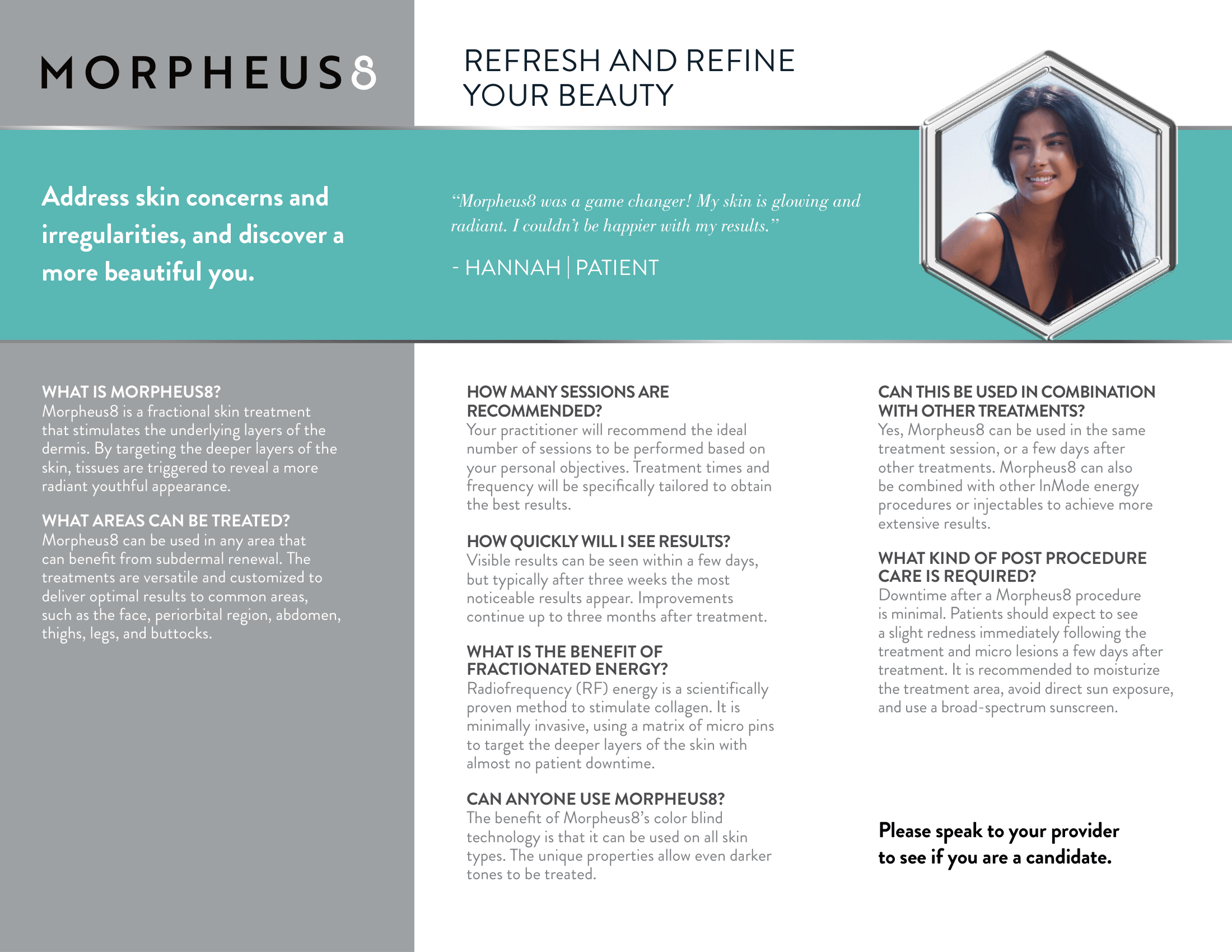
- Morpheus8 is a fractional skin treatment that stimulates the underlying layers of the dermis. By targeting the deeper layers of the skin, tissues are triggered to reveal a more radiant, youthful appearance.
- A matrix of micro pins delivers radiofrequency (RF) energy beneath the skin surface — a scientifically proven method of stimulating collagen with minimal downtime.
- Treatments are versatile and can be customized for any area that benefits from subdermal renewal, including the face, periorbital region, neck, abdomen, thighs, legs, and buttocks.
- Morpheus8 uses colour-blind technology, meaning it can be safely used on all skin types, including darker skin tones.
- Visible results can be seen within a few days, with the most noticeable results typically appearing after three weeks. Improvements continue for up to three months after treatment.
- The ideal number of sessions is determined at consultation based on your personal objectives. Morpheus8 can also be combined with other treatments or injectables for more extensive results.
- Downtime is minimal. Expect slight redness immediately after treatment and micro lesions for a few days. Moisturize the area, avoid direct sun exposure, and use a broad-spectrum sunscreen.
Morpheus8 is a non-OHIP insured cosmetic service. Fees will be discussed at the time of consultation.
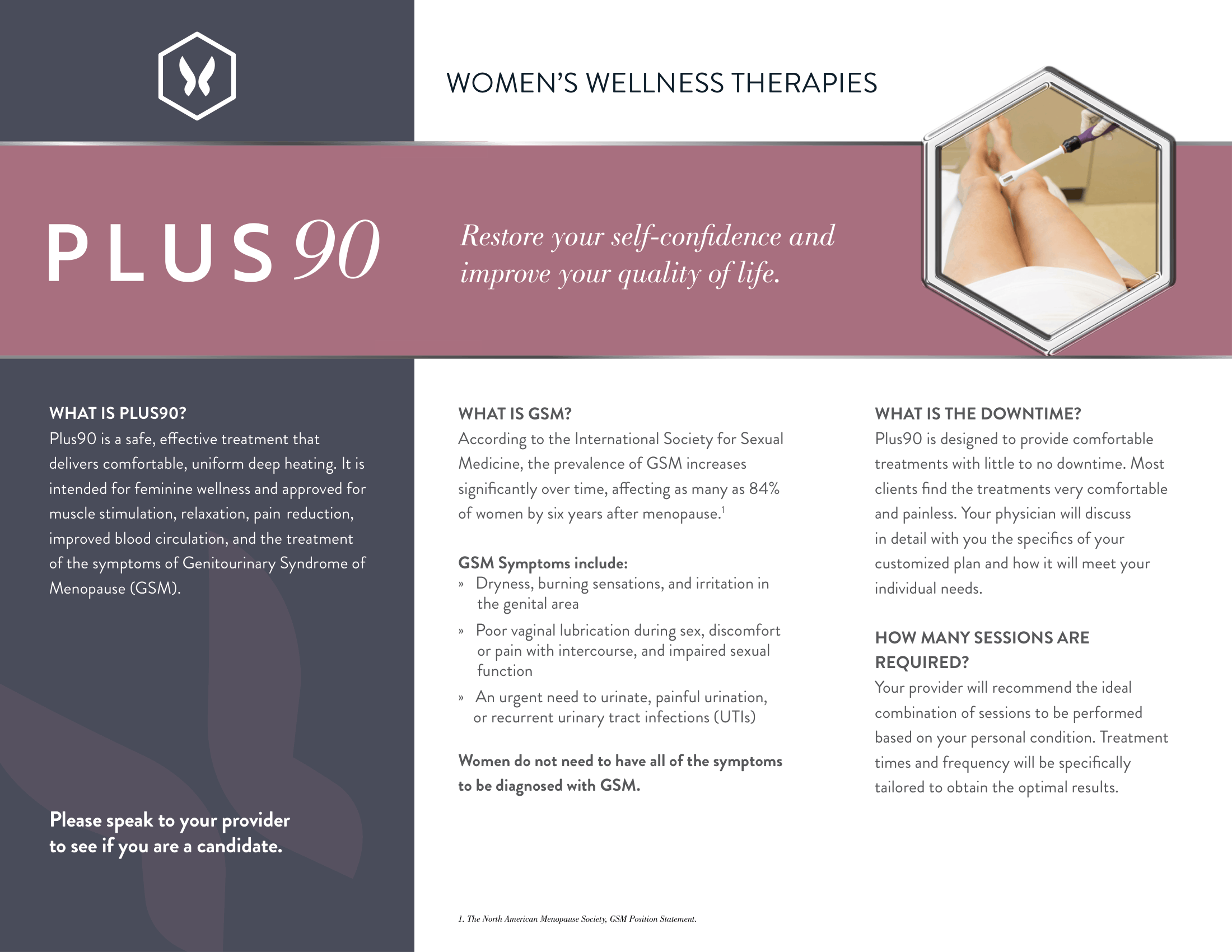
Plus90 — Non-Surgical Radiofrequency Feminine Wellness
A safe, gentle, non-surgical radiofrequency treatment that delivers comfortable, uniform deep heating for women's intimate wellness.
- Plus90 is a safe and effective treatment that delivers comfortable, uniform deep heating. It is intended for feminine wellness and is approved for muscle stimulation, relaxation, pain reduction, improved blood circulation, and the treatment of symptoms of Genitourinary Syndrome of Menopause (GSM).
- GSM symptoms include dryness, burning sensations, and irritation in the genital area; poor lubrication, discomfort or pain with intercourse, and impaired sexual function; and urinary urgency, painful urination, or recurrent urinary tract infections.
- GSM prevalence increases significantly over time, affecting as many as 84% of women by six years after menopause. Women do not need to have all symptoms to be diagnosed with GSM.
- Plus90 is designed to provide comfortable treatments with little to no downtime. Most patients find the treatments very comfortable and painless.
- Your treatment plan — including the number of sessions and their frequency — is tailored to your individual condition and goals.
- A recent gynecologic exam is required before treatment. Please review the pre and post care handout for full preparation instructions and contraindications.
Plus90 is a non-OHIP insured service. Fees will be discussed at the time of consultation.
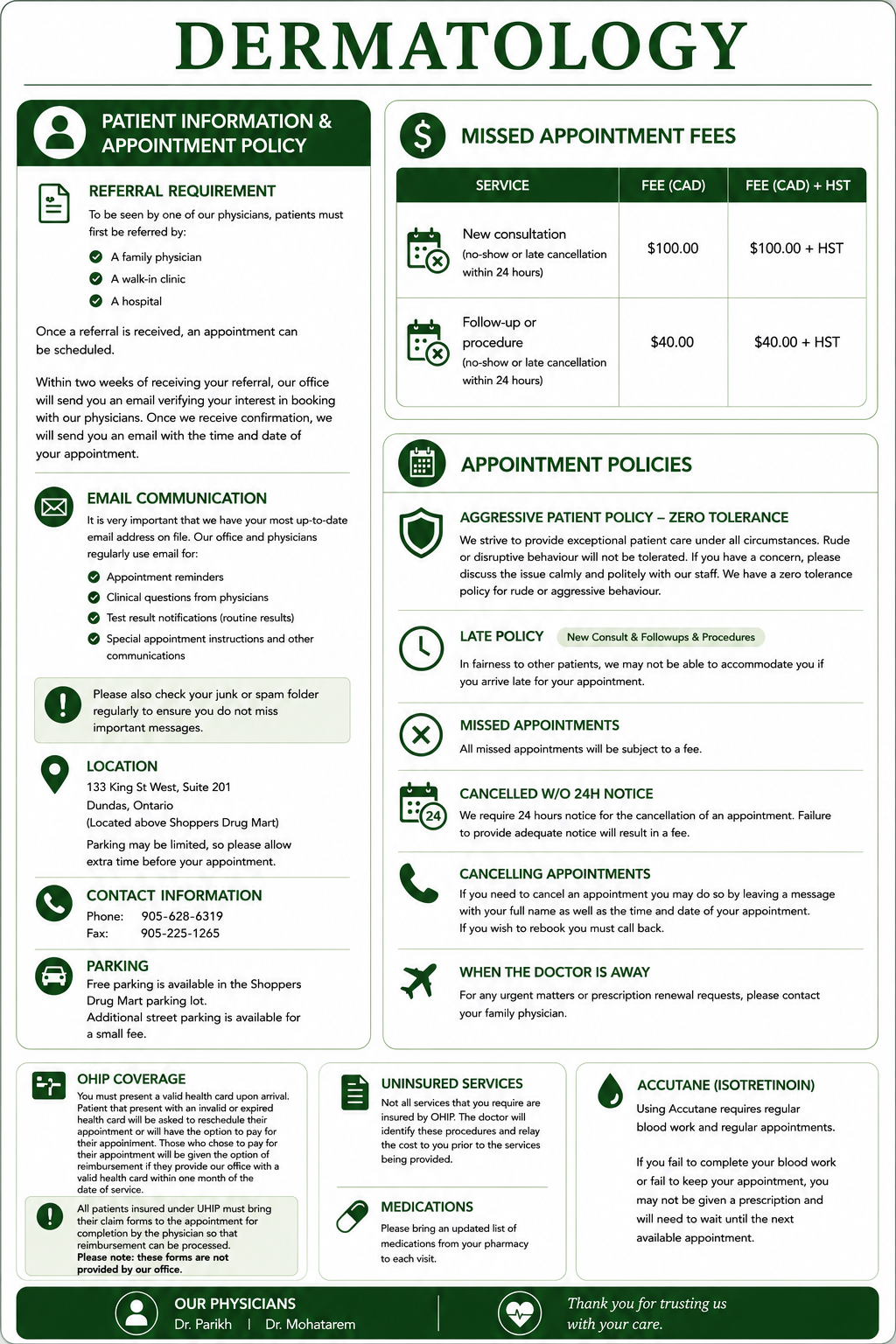
Post-Procedure Wound Care Instructions
Proper wound care is essential for healing and minimizing scarring. Please follow these instructions carefully based on the specific procedure you had today.
Important General Rule for All Wounds:
Always wash your hands thoroughly with soap and water before touching your wound or changing your dressing.